








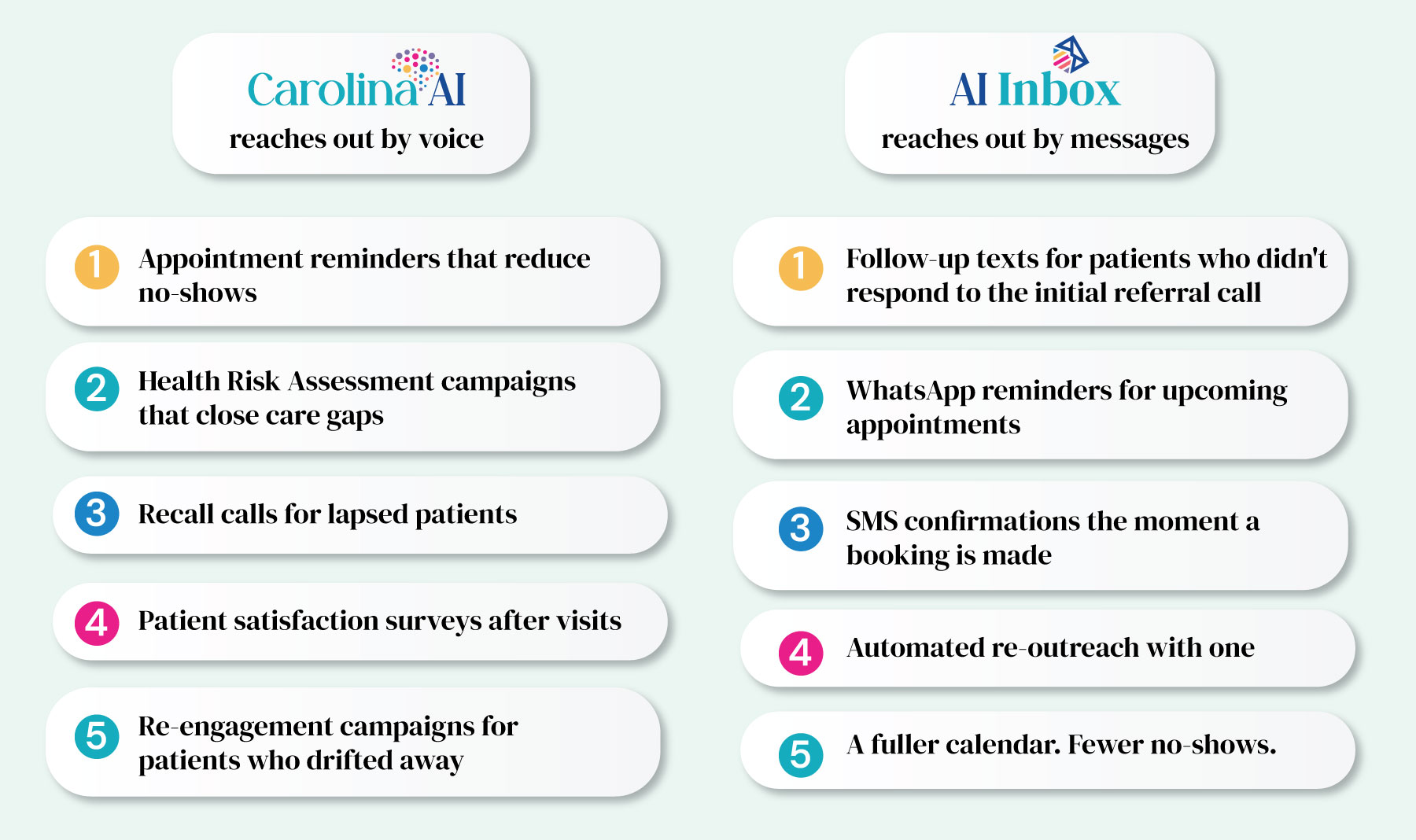
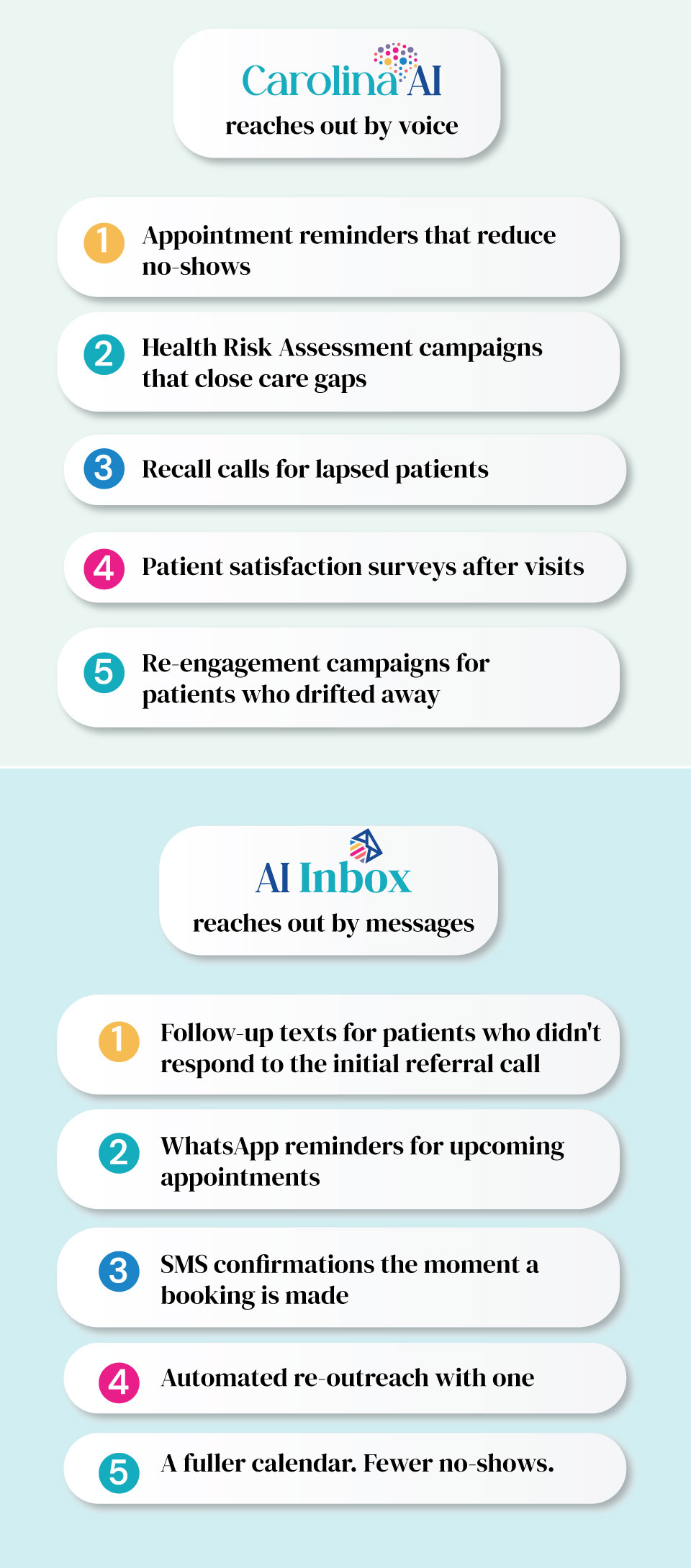


Telemedicine allows patients to consult doctors from home using video calls, online appointments, and remote monitoring. It is convenient and saves time, but it can be challenging. Doctors may have heavy workloads, scheduling can be difficult, and patient information can pile up quickly.
AI helps with these challenges by automating tasks, analyzing patient data, sending reminders, and improving communication. It also identifies urgent cases and assists doctors in making quicker, more accurate decisions. This allows healthcare teams to focus on patients and ensures care is timely and efficient.
Key Takeaways
AI is changing telemedicine by:
- Automating scheduling, reminders, and routine administrative tasks
- Prioritizing urgent cases with intelligent triage
- Helping doctors analyze symptoms and medical images more efficiently
- Identifying patients at risk through predictive analytics
- Offering 24/7 patient support via AI chatbots
- Maintaining patient privacy with HIPAA-compliant systems
Smarter Scheduling and Reminders
One of the main challenges in telemedicine is scheduling appointments. Traditional methods are slow, with patients waiting on hold and staff managing busy calendars. AI simplifies this process:
- Patients can book appointments instantly through chatbots or voice assistants
- The system checks availability and sends automatic reminders
- Conflicting appointments are rescheduled automatically
This ensures patients get faster access to care while staff spend less time coordinating schedules.
Automated Patient Triage
AI can also screen patient symptoms before appointments, helping prioritize urgent cases. For example, a patient reporting severe chest pain will be flagged immediately, while someone with mild symptoms will be scheduled for a routine consultation. AI gathers important information through structured questions and organizes it for the doctor. This ensures that appointments start with clear priorities and all relevant patient information is ready for review.
Enhanced Diagnostic Support
AI provides tools that help doctors make more accurate and timely decisions during telemedicine visits. It can:
- Analyze medical images such as X-rays, MRIs, and skin scans
- Review patient histories and highlight potential drug interactions
- Detect patterns in chronic conditions like diabetes or heart disease
Doctors can view these insights during consultations, saving time and helping them make faster, more accurate decisions.
Continuous Remote Monitoring
For patients with long-term health conditions, AI can track data from wearables and home devices in real time. It sends alerts when readings, such as blood pressure or blood sugar, are abnormal. This helps doctors act early, preventing minor problems from becoming serious. Proactive monitoring is helpful for chronic conditions, helping keep patients healthier.
Predictive Analytics for Prevention
AI can also analyze large amounts of patient data to identify future health risks. It helps providers detect early warning signs of complications and recommend preventive care. By shifting the focus from reactive treatment to proactive prevention, AI ensures that patients receive care before issues become critical, reducing hospital visits and improving overall health outcomes.
Round-the-Clock Patient Support
AI-powered chatbots offer 24/7 patient assistance, providing support even outside regular clinic hours. They can:
- Answer questions about medications
- Provide post-visit instructions
- Collect symptom updates
- Escalate urgent issues to a human provider
This ensures that patients get quick answers when they need them and that staff can focus on more complex cases rather than routine inquiries.
Streamlined Documentation
AI can automatically transcribe telemedicine consultations, update electronic health records, and generate billing codes. This reduces the time doctors spend on paperwork, allowing them to focus on patient care. It also streamlines workflows for the entire healthcare team, making telemedicine operations smoother and more efficient.
Why AI Matters in Telemedicine
Integrating AI into telemedicine makes healthcare faster, more organized, and patient-focused. Patients experience quicker service, more transparent communication, and timely care, while doctors and staff experience less stress and more structured workflows. At the same time, AI platforms maintain strong privacy standards to ensure patient information is always protected and compliant with regulations.
Easy Implementation
Modern AI systems work efficiently with existing telemedicine platforms and phones. They automatically manage scheduling, triage, reminders, and patient messages. No extra equipment or complicated setup is needed, so staff can focus on care while patients get fast, reliable support.
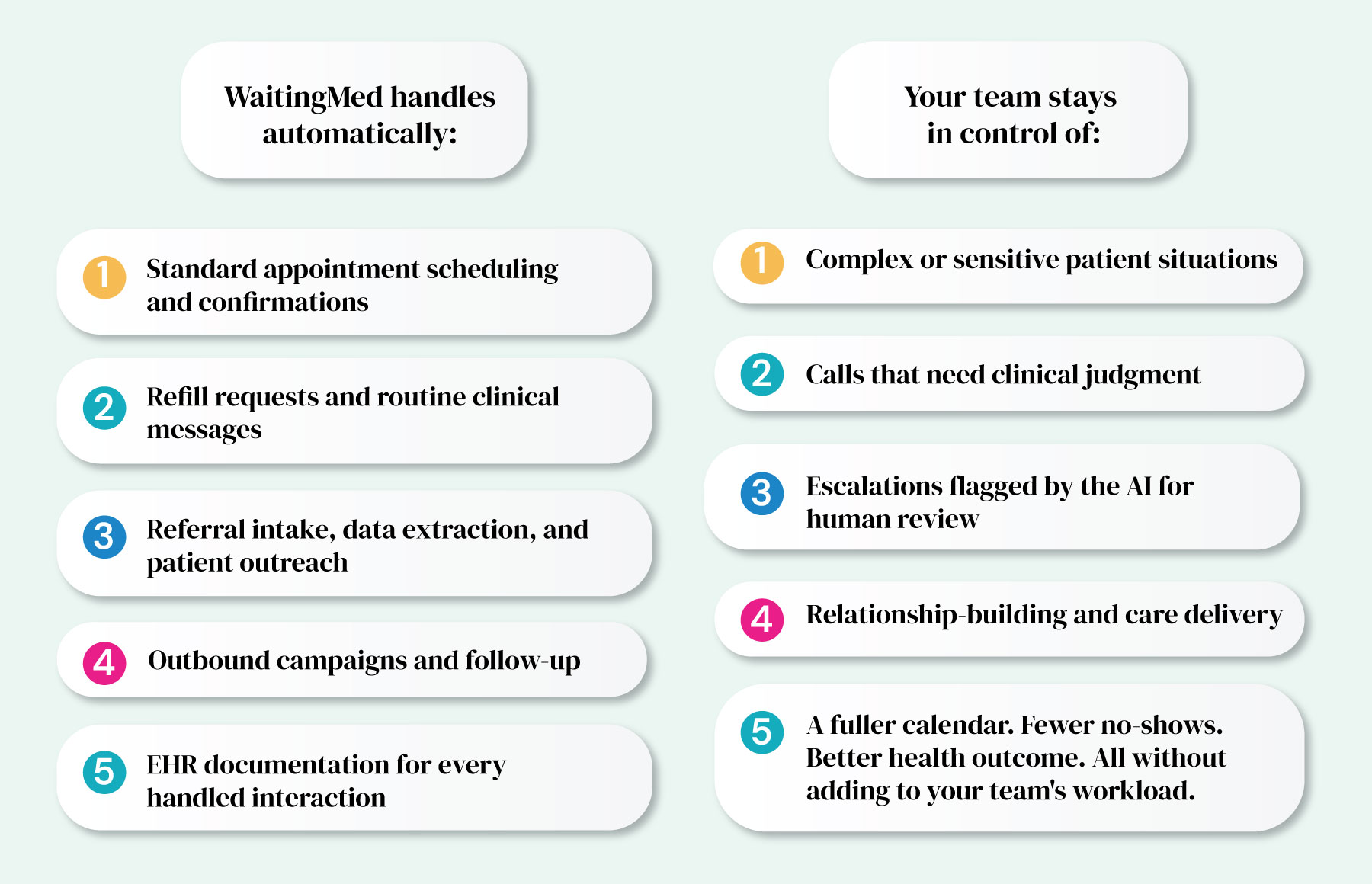
Telemedicine with AI is changing healthcare. With WaitingMed, patients get faster care, doctors make better decisions, and practices run smoothly. AI reduces administrative work and supports healthcare teams, making care more efficient, reliable, and patient-focused.
Our Service Areas – In South Florida
Miami-Dade County: Miami, Miami Beach, Coral Gables, Hialeah, Kendall, Homestead, North Miami, Doral, Aventura
Broward County: Fort Lauderdale, Hollywood, Pembroke Pines, Miramar, Coral Springs, Pompano Beach, Sunrise, Weston, Deerfield Beach
Palm Beach County: West Palm Beach, Boca Raton, Boynton Beach, Delray Beach, Wellington, Lake Worth Beach, Jupiter, Palm Beach Gardens, Greenacres
Monroe County: Key West, Marathon, Key Largo, Islamorada, Big Pine Key