









It’s 9 AM on a Monday, and the phones are already ringing nonstop. Your front desk is overwhelmed, calls are stacking up, and patients are hanging up in frustration. Important messages are written down quickly and often get missed. This daily chaos leads to lost patients, lost revenue, and a stressed team.
Medical practices handle many calls every day, from appointments and prescription refills to insurance and general questions. Hiring more staff is not always affordable or practical. Call management systems solve this problem by organizing and handling calls more efficiently, helping your practice run smoothly and keep patients happy.
Key Takeaways
- Call management systems route and organize calls to improve efficiency and patient experience
- HIPAA compliance is essential for protecting patient information in healthcare settings
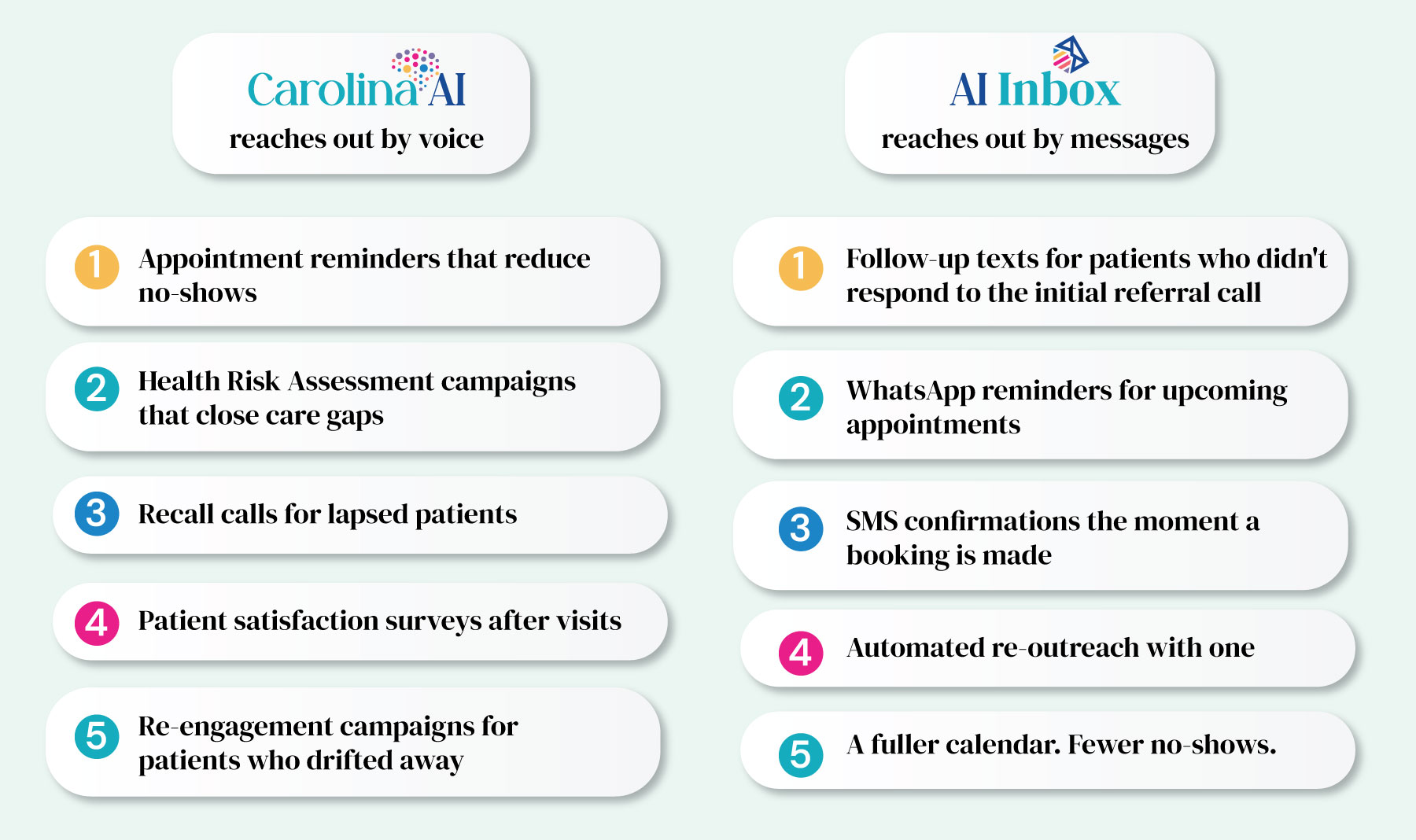
- AI-powered automation handles routine tasks while staff focus on complex patient needs
What Is a Call Management System?
A call management system is software that helps handle incoming calls in an organized way. It answers calls, routes them to the right person or department, and ensures no call is missed. You can think of it as an intelligent assistant that works all day without breaks.
For medical practices, it does more than just forward calls. It can book appointments, gather patient details, handle urgent calls first, and track call activity, all while complying with HIPAA. The goal is to give patients fast, professional service while making the front desk work easier.
Core Features That Matter for Healthcare
When evaluating call management systems for your medical practice, focus on these critical capabilities:
1. Interactive Voice Response (IVR)
This system answers calls and directs callers to the right option, such as appointments or prescription refills. Modern IVR lets patients say what they need instead of pressing numbers.
2. Intelligent Call Routing
The system automatically routes calls according to preset rules. New patient calls go to registration. Billing questions should be routed to your billing department. Urgent medical concerns are routed to on-call providers immediately. This eliminates transfers, reduces wait times, and gets patients to the right person faster.
3. Call Queuing and Callbacks
When all lines are busy, calls are placed in a queue. The system provides estimated wait times and automatically issues callbacks, so patients don’t sit on hold for long. This simple feature dramatically improves patient satisfaction.
4. AI-Powered Call Handling
Modern systems use AI to handle full conversations. They answer common questions, book appointments, confirm details, and manage routine tasks, so your staff can focus on patients who need personal care.
5. After Hours Coverage
Your call management system should work around the clock. Patients calling at 10 PM still receive appropriate assistance, whether scheduling a next-day appointment or routing genuine emergencies to on-call providers.
6. Call Analytics and Reporting
Track call volume, peak times, average wait times, call outcomes, and more. These insights help you optimize staffing, identify training opportunities, and make data-driven decisions about your practice operations.
7. Multi-Channel Integration
The best systems handle more than just phone calls. They manage text messages, emails, and patient portal communications from one platform, all HIPAA-compliant.
What to Look For in a Healthcare Call Management System
Not every solution fits medical practices. Here’s what to prioritize:
HIPAA Compliance First
This is required. Your call management provider must sign a Business Associate Agreement, protect data with encryption, maintain the security of information, and comply with HIPAA rules.
Seamless Integration
The system should work with your existing phone infrastructure and EHR system. You shouldn’t need to buy new equipment, change phone numbers, or rebuild your entire technology stack.
Ease of Implementation
Complex systems that take months to deploy and weeks to learn won’t help your practice. Look for a solution that can be up and running in days with minimal training required.
Scalability
Whether you’re a solo practitioner or a multi-location practice, the system should grow with you. Adding providers, locations, or services shouldn’t require starting from scratch.
How WaitingMed Simplifies Call Management
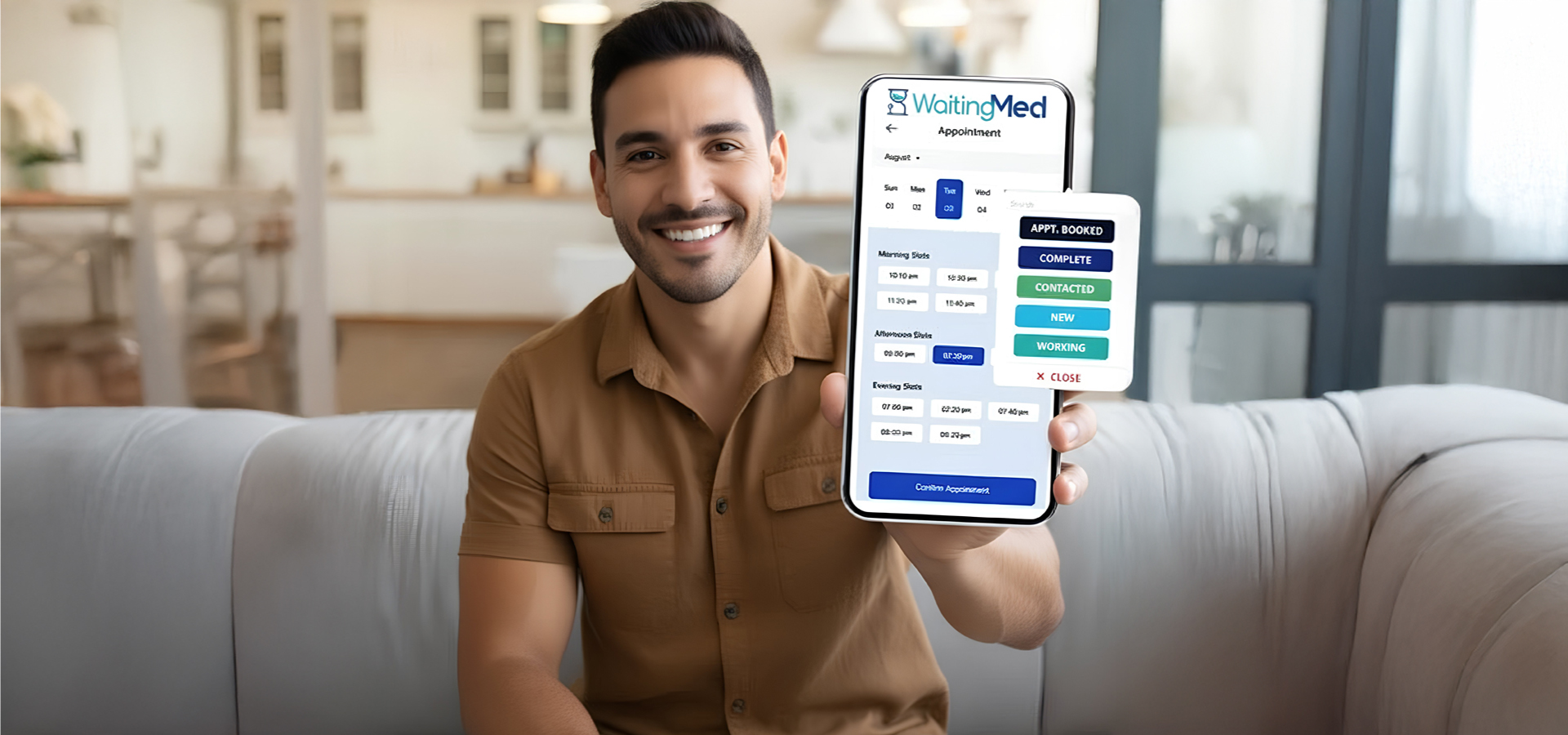
WaitingMed offers a comprehensive management solution made especially for healthcare providers. Our HIPAA-compliant system works smoothly with your existing phone setup, so there is no need for new equipment, phone numbers, or a complex setup.
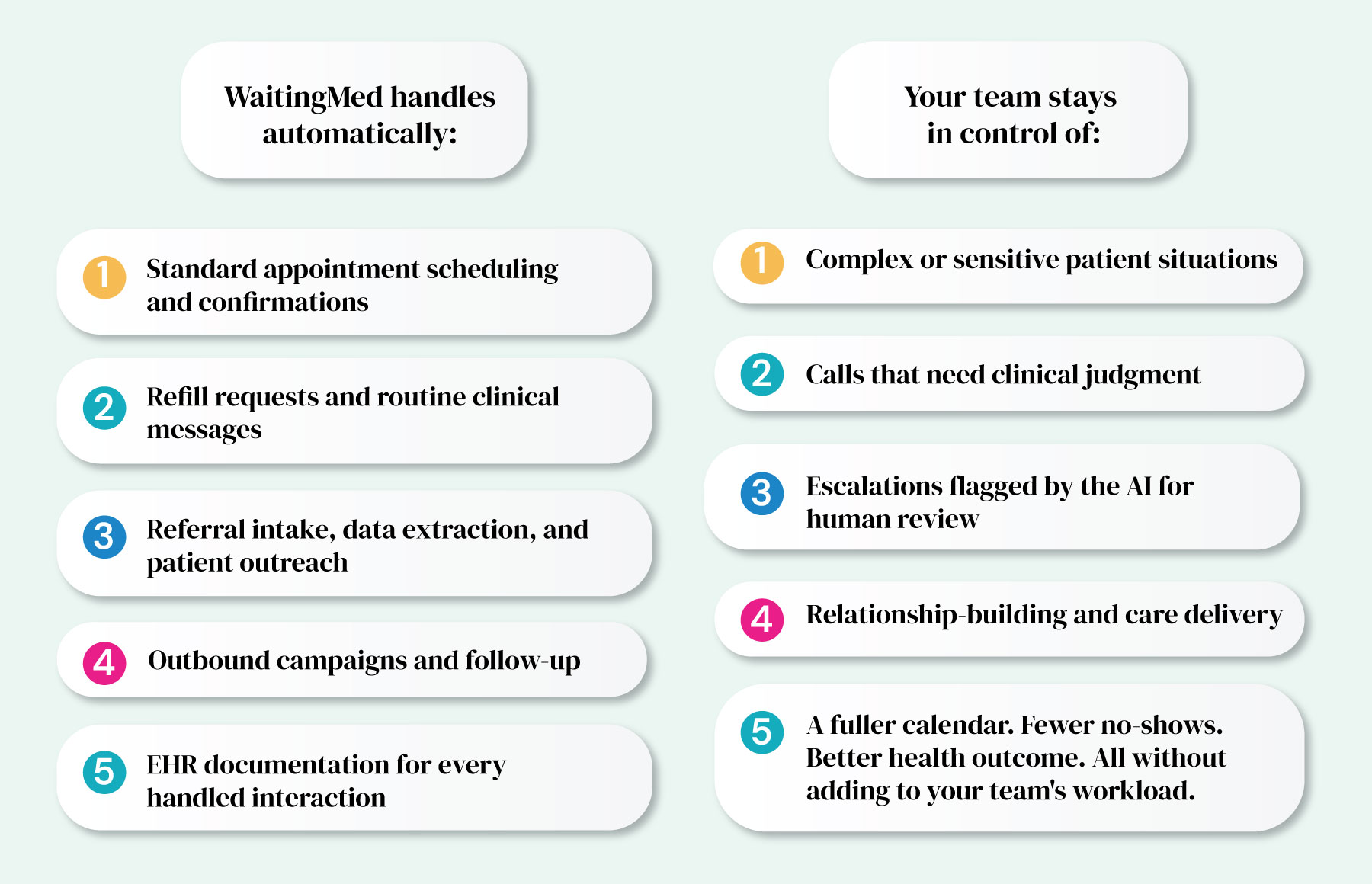
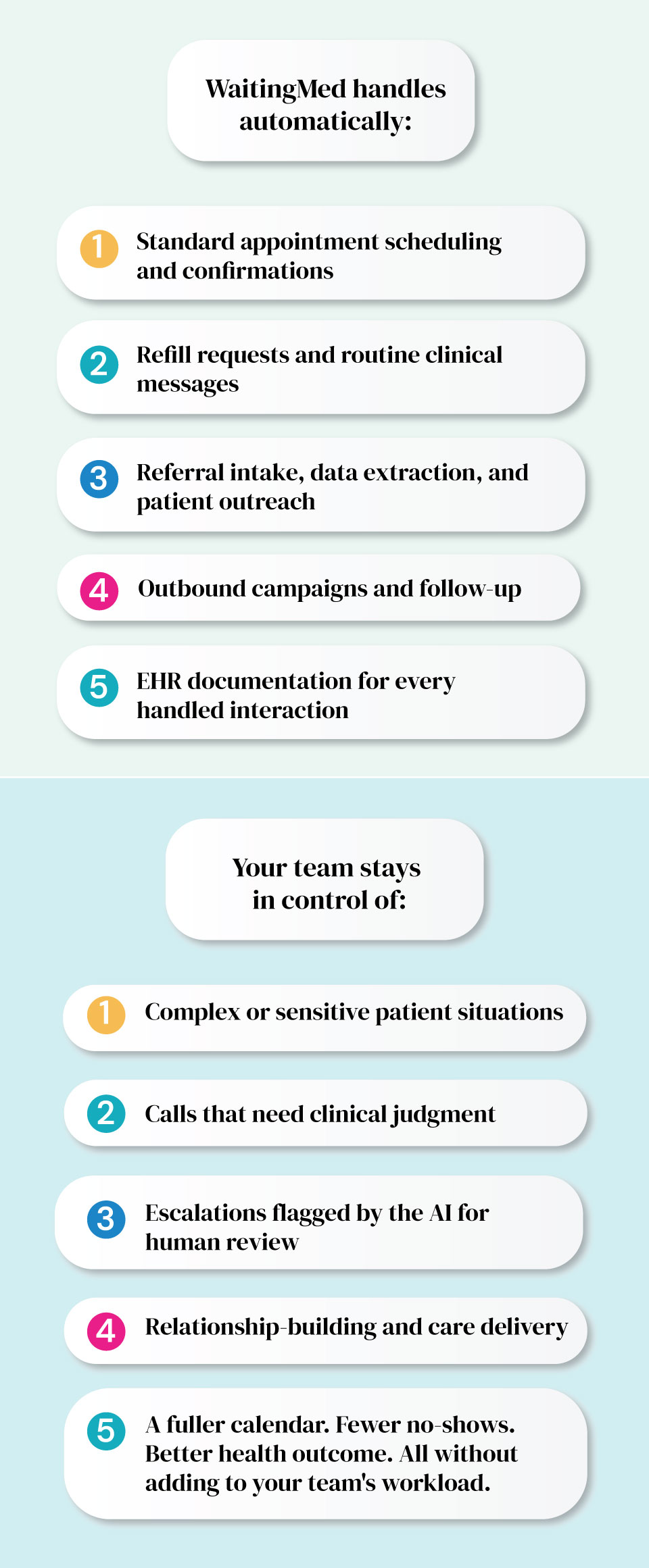
Our AI handles routine calls around the clock. It books appointments, answers standard questions, and passes complex calls to your staff. Patients get quick, professional service, and your team has less stress. Setup is fast, and you should see results within hours.
Transform Your Practice Today
Don’t let missed calls cost you patients or stress your staff. Old phone systems waste time and money.
Book a demo with WaitingMed and see how our AI-powered, HIPAA-compliant system handles calls better using your current phone setup. Your patients are calling. Be ready.
Our Service Areas – In South Florida
Miami-Dade County: Miami, Miami Beach, Coral Gables, Hialeah, Kendall, Homestead, North Miami, Doral, Aventura
Broward County: Fort Lauderdale, Hollywood, Pembroke Pines, Miramar, Coral Springs, Pompano Beach, Sunrise, Weston, Deerfield Beach
Palm Beach County: West Palm Beach, Boca Raton, Boynton Beach, Delray Beach, Wellington, Lake Worth Beach, Jupiter, Palm Beach Gardens, Greenacres
Monroe County: Key West, Marathon, Key Largo, Islamorada, Big Pine Key